
Creator Platform MVP: What You Actually Need to Launch First
Learn how to plan a lean creator platform MVP around one repeatable transaction. This guide explains which features to launch first, what to postpone, how MVP scope changes for subscription, live video, AI, and expert platforms, and when to choose custom development, SaaS, or white-label software.


Plan a lean creator platform MVP. Learn which features to launch first, what to skip, and when to choose custom build vs white-label software.
A creator platform MVP is not a smaller copy of OnlyFans, Patreon, Twitch, or another established platform.
It is the smallest working product that can complete and measure one repeatable commercial transaction:
A creator publishes an offer → a user pays → the platform delivers access or an interaction → the platform records revenue → the creator receives earnings and a payout.
Many founders approach an MVP by writing a long list of creator platform features. They live events, recommendations, gamification, mobile applications and detailed analytics before confirming that users will complete the first paid action.
This turns the MVP into a slow and expensive development project.
A better approach is to decide which transaction the platform must prove, then build only the features required to complete, support, and measure that transaction.
Quick answer: what should a creator platform MVP include?
A typical creator platform MVP needs:
- creator profiles or offer pages;
- basic creator onboarding;
- one primary paid content, service, or interaction format;
- user registration and checkout;
- payment confirmation;
- access or service delivery;
- creator earnings and payout logic;
- essential admin controls;
- basic transaction and funnel analytics;
- terms, policies, and a way to report problems.
It does not usually need native mobile apps, advanced recommendation engines, extensive gamification, a deep CRM, custom AI infrastructure, or every monetization feature used by mature creator platforms.
The exact launch scope depends on the first paid action.
A fan subscription platform, webcam site, AI companion product, and expert marketplace should not use the same MVP checklist. Each business needs a different transaction loop, operational setup, and definition of success.
What a creator platform MVP must prove

An MVP should test business assumptions rather than demonstrate how many features a development team can produce.
Before scaling, a founder needs evidence for four connected hypotheses.
1. The supply hypothesis
Creators, performers, experts, or other providers must be willing and able to supply what the platform promises.
That means more than completing registration. They need to:
- create a useful profile;
- publish content or define an offer;
- remain available when needed;
- understand how they will earn;
- complete the expected service;
- follow the platform’s policies.
A creator marketplace with 500 inactive profiles has less useful supply than one with 20 relevant creators who are ready to serve the first customers.
2. The demand hypothesis
Users must be willing to pay for the proposed value.
Traffic, registrations, likes, messages, and content views can indicate interest, but they do not validate the commercial model.
The strongest early signal is a completed paid action:
- a fan starts a membership;
- a user unlocks premium content;
- a viewer pays for private live time;
- a client books a consultation;
- an AI user purchases a subscription or credits.
The MVP should make that action easy to understand and complete.
3. The delivery hypothesis
After payment, the user must receive what was promised.
Depending on the product, delivery might mean:
- opening access to a subscriber-only feed;
- unlocking a video or image;
- starting a paid private chat;
- joining a live session;
- confirming an appointment;
- continuing an AI conversation;
- receiving a digital product.
Payment without reliable delivery creates refunds, support requests, and distrust.
4. The economic hypothesis
The transaction must create enough platform revenue to support the costs connected to it.
A platform can process payments successfully and still have poor unit economics because of:
- creator payouts;
- payment processing;
- payout fees;
- refunds and chargebacks;
- streaming costs;
- AI generation costs;
- content delivery;
- moderation;
- customer support.
The MVP does not need to prove the final profitability of the entire company. It should show whether the core transaction has a credible path to a sustainable margin.
For a deeper breakdown of take rates, payouts, revenue streams, and platform economics, see the Scrile Academy guide to the creator platform business model.
The minimum creator platform transaction loop

A creator platform MVP needs more than a checkout page. It needs an end-to-end workflow that connects supply, payment, delivery, earnings, and administration.
A complete transaction loop usually contains the following stages.
1. Creator onboarding
The creator must be able to join the platform and provide the information needed to operate.
The minimum onboarding flow may include:
- email or phone verification;
- basic profile information;
- display name and description;
- profile image;
- category or service type;
- payment or payout details;
- agreement with platform policies;
- identity or age verification where required.
Not every step needs to be automated at launch.
For example, a founder may manually review and approve the first 20 creators. That can be more useful than spending weeks building an automated scoring system before understanding which creators make good partners.
However, manual onboarding must still be consistent. The founder should know what is being checked, who approves an account, and why an application might be rejected.
2. Offer creation
The creator needs a way to define what users can buy.
Depending on the platform, the offer may be:
- a monthly membership;
- a paid post;
- a premium video;
- access to private messages;
- a per-minute live session;
- a scheduled consultation;
- a digital product;
- a token-based AI interaction.
The offer page should explain:
- what the user receives;
- how much it costs;
- whether the payment recurs;
- when access begins;
- whether cancellation or refunds are available.
An MVP can support only one offer type. It does not need a complex product catalog from the first day.
3. Discovery
Users need a way to find the offer.
At launch, this may be as simple as:
- a direct creator profile link;
- a curated homepage;
- a small category list;
- a landing page;
- manual recommendations;
- links shared by creators.
A recommendation engine is not necessary when the platform has 15 creators and the first users arrive through direct links.
Discovery should become more sophisticated only when the volume and diversity of supply make manual navigation ineffective.
4. Registration and payment
The user needs to create an account and complete the first payment without unnecessary steps.
The payment flow should answer:
- what is being purchased;
- how much will be charged;
- whether the charge repeats;
- which payment methods are accepted;
- what happens after payment;
- how the purchase can be managed or canceled.
The platform must also define how money moves between the customer, the platform, and the creator.
Payment architecture affects more than checkout. Depending on the payment configuration, the platform may need to manage creator onboarding, payout timing, refunds, disputes, negative balances, and transaction fees. Stripe’s marketplace documentation, for example, treats seller onboarding, accepting payments, collecting platform fees, paying connected accounts, and handling refunds and disputes as separate essential tasks.
5. Access or interaction delivery
A successful payment must trigger a clear product response.
Examples include:
- adding the user to a subscriber list;
- opening protected content;
- adding credits to a wallet;
- starting a billing timer;
- confirming a booking;
- enabling a premium AI feature.
This process should be tested not only when everything works, but also when:
- the payment is declined;
- confirmation is delayed;
- the user pays twice;
- access fails to open;
- a session is canceled;
- the creator account is suspended;
- a refund is requested.
The first users will find these exceptions. The MVP needs a controlled way to resolve them.
6. Platform revenue and creator earnings
The platform must record the transaction and calculate the correct shares.
At minimum, the system or operating process should identify:
- total transaction value;
- platform fee;
- creator earnings;
- payment status;
- refundable amount;
- available and pending creator balance;
- payout status.
Creators need to understand how their earnings are calculated. Confusing balances can damage creator trust even when the underlying calculation is correct.
7. Creator payout
The MVP needs a defined payout process, even when payouts are handled manually.
The founder should decide:
- which payout methods are supported;
- how often payouts are made;
- whether there is a minimum payout;
- how long funds remain pending;
- how refunds affect creator balances;
- who covers payout fees;
- what happens when a payout fails.
Payment providers can support automatic, scheduled, manual, or instant payouts depending on the setup, but payout timing and responsibility still need to be reflected in the platform’s rules and creator communication.
8. Admin resolution
An administrator must be able to see what happened and intervene.
The minimum admin capabilities usually include:
- viewing users and creators;
- approving or blocking accounts;
- reviewing content;
- viewing transactions;
- correcting access problems;
- checking balances;
- managing refund requests;
- changing basic platform settings;
- responding to reports.
The admin panel does not need advanced automation. It needs visibility and control over the transaction being tested.
9. Analytics
The platform should record the main events in the funnel.
At minimum:
- creator registration;
- completed creator profile;
- first published offer;
- user registration;
- checkout started;
- successful payment;
- failed payment;
- content unlocked or session started;
- refund;
- repeat purchase;
- creator payout.
Without these events, the founder may know that revenue is low but not where the transaction loop is breaking.
Creator platform features: must-have, should-have, and later
There is no universal feature list, but most launch decisions can be organized into three levels.
| Product area | Must-have for launch | Should-have after early validation | Usually later |
|---|---|---|---|
| Creator onboarding | Basic profile, approval, policy agreement, payout details | Guided setup and onboarding progress | Automated creator scoring and complex verification workflows |
| User accounts | Registration, login, account recovery | Social login and profile preferences | Complex identity system across several products |
| Monetization | One primary paid action | One complementary revenue stream | Full set of subscriptions, PPV, tips, calls, products, events, and advertising |
| Content or service setup | Basic publishing, pricing, or availability | Scheduling, drafts, bundles, reusable templates | Complex content planning and advanced catalog management |
| Payments | Checkout, payment status, receipts, basic refunds | Additional payment methods and currencies | Advanced routing across many merchants and regions |
| Access delivery | Gated content, session access, booking, credits, or premium status | Better notifications and self-service management | Complex entitlement combinations |
| Creator earnings | Transaction history and balance | Earnings filters and scheduled payouts | Advanced financial forecasting |
| Admin | User, creator, content, and transaction controls | Role-based permissions and improved reporting | Deep workflow automation |
| Analytics | Activation, payment, and delivery events | Cohorts and retention reports | Predictive analytics and complex attribution |
| Discovery | Direct links, curated listings, categories | Search, filters, tags | Personalized recommendation engine |
| Communication | Transactional emails or essential notifications | Direct messages and campaign tools | Complex marketing automation |
| Mobile experience | Responsive website | Progressive web app or selected mobile functions | Separate native iOS and Android applications |
| Growth tools | Manual invitations and tracked links | Basic referrals | Multi-level affiliate system |
| Engagement | Core paid interaction | Simple notifications, favorites, or follows | Advanced gamification and loyalty systems |
A feature belongs in the launch version only when removing it would prevent the first transaction, make delivery unreliable, or leave the platform unable to resolve a predictable problem.
Creator platform MVP by business model
The correct MVP scope depends on what users are paying for.
Fan subscription platform MVP
A fan subscription platform lets creators monetize access to content, communication, or an ongoing membership.
Its primary transaction loop may be:
Creator publishes an offer → fan subscribes → protected content opens → platform records its fee → creator balance increases.
Must-have subscription platform features
A lean subscription platform normally needs:
- creator profiles;
- subscription plans or PPV content;
- a content feed;
- protected posts or media;
- fan registration;
- recurring or one-time checkout;
- access management;
- creator earnings;
- payout logic;
- admin moderation;
- basic transaction analytics.
Messaging can be part of the MVP when direct communication is the main value proposition. It can wait when the initial offer is primarily access to content.
What can usually wait
Depending on the concept:
- stories;
- livestreaming;
- advanced mass messaging;
- content bundles;
- fundraising tools;
- several subscription tiers;
- detailed creator analytics;
- recommendation engines;
- native applications;
- sophisticated fan loyalty programs.
A list of OnlyFans clone features should not automatically become an MVP checklist. A mature fan platform may combine subscriptions, PPV, tips, messaging, live video, stories, referrals, lists, promotions, and creator management.
The MVP only needs the part of that system required to prove why the first fan will pay.
Founders building an OnlyFans-style creator platform should begin with the strongest intended revenue action rather than attempting to reproduce the complete product at launch. Scrile Connect already supports subscriptions, tipping, PPV, private calls, livestreams, mass messaging, and content bundles, but an individual project can introduce these tools in stages.
What to measure
- percentage of approved creators who publish an offer;
- time to first creator publication;
- visitor-to-registration conversion;
- registration-to-payment conversion;
- payment approval rate;
- subscriber renewal;
- PPV purchase rate;
- time to first creator earning;
- refund and chargeback rate.
Webcam and paid live calls MVP
A webcam or paid video platform monetizes real-time access.
Its transaction loop may be:
Performer goes online → user enters the platform → user starts a paid session → billing tracks usage → platform and performer earnings are calculated.
In this case, live video cannot be postponed. It is not an additional engagement feature. It is the core product being validated.
Must-have features
- performer profiles;
- performer onboarding and approval;
- online or available status;
- live video;
- private session controls;
- session timer or metered billing;
- user balance, credits, or direct checkout;
- performer earnings;
- session history;
- basic moderation;
- admin controls;
- payout workflow.
A free preview or public room may be useful if users need to evaluate performers before paying, but it is not required for every model.
What can usually wait
- group shows;
- complex virtual gift catalogs;
- games;
- advanced loyalty levels;
- competitions and leaderboards;
- multiple live formats;
- extensive fan clubs;
- mobile applications;
- automated performer ranking.
What to measure
- approved performers who go online;
- average performer online hours;
- user-to-paid-session conversion;
- paid minutes per customer;
- average revenue per paid minute;
- performer occupancy;
- repeat spender rate;
- session failure rate;
- streaming cost per paid minute;
- chargebacks and refunds.
A white-label live video platform can shorten the path to this test because the core workflow already includes private chats, group streams, paid sessions, tips, payment integrations, and administrative controls.
AI companion platform MVP
An AI companion platform typically monetizes access, usage, or premium generated content.
Its first transaction loop may be:
User selects a character → begins a conversation → reaches a premium trigger → purchases a subscription or credits → premium interaction continues.
The MVP does not need dozens of characters, unlimited generation, or a proprietary foundational model.
It needs enough personality and continuity for users to understand the experience and reach the first paid action.
Must-have features
- a small character catalog;
- character profiles;
- chat interface;
- basic conversational memory;
- one clear premium trigger;
- subscriptions, credits, or both;
- usage limits;
- payment and account management;
- content moderation;
- generation cost tracking;
- basic admin controls;
- retention analytics.
If image generation is the primary reason users pay, images belong in the MVP. If images are only a possible future add-on, text chat may be enough for the first test.
What can usually wait
- user-generated characters;
- hundreds of prebuilt personas;
- custom foundational AI models;
- advanced voice cloning;
- video generation;
- complex relationship progression;
- recommendation engine;
- native applications;
- elaborate achievement systems.
What to measure
- visitor-to-chat-start conversion;
- messages before the first premium trigger;
- free-to-paid conversion;
- subscription and token revenue;
- usage per paying user;
- generation cost per user;
- gross margin by plan;
- one-day, seven-day, and thirty-day retention;
- percentage of users who return to the same character.
Scrile AI provides a white-label foundation with custom personas, chat, memory, image and voice functionality, monetization, analytics, and safety controls. A specific MVP can start with only the components required for its chosen experience.
What not to build first
The following features are frequently included in early specifications even when they do not help validate the core transaction.
They are not bad features. They are simply expensive distractions when the commercial loop has not yet been proven.
Native mobile applications
A responsive website is often enough for an initial test.
Native applications add:
- separate development and QA;
- store submission and review;
- release management;
- platform-specific payment rules;
- additional analytics and notification setup.
A mobile application belongs in the MVP when device functionality is central to the experience or when the intended audience will not realistically use a browser-based product.
It should not be included only because established competitors have apps.
Advanced recommendation engines
Personalized discovery becomes valuable when the platform has enough users, creators, content, and behavioral data to produce meaningful recommendations.
Before that point, curated categories, search, filters, and direct creator links are usually sufficient.
A recommendation engine cannot compensate for weak supply.
Complex gamification
Levels, badges, quests, loyalty points, streaks, and leaderboards may improve engagement later.
They should not be used to hide an unclear paid offer.
Basic gamification belongs in the MVP only when progression is itself the product, as it might be in some AI companion or fan loyalty concepts.
Deep CRM
The MVP needs transaction history and enough user context to provide support.
It does not necessarily need:
- advanced segmentation;
- automated customer journeys;
- lead scoring;
- complex sales pipelines;
- extensive campaign orchestration.
Early operations can often use a simple CRM or manual workflow until recurring patterns become clear.
Custom AI infrastructure
An AI product does not automatically need a model trained from scratch.
Custom infrastructure may become important when the proprietary model, data, safety system, or generation quality is the main competitive advantage.
For an early AI companion MVP, the more important question is often whether users value the characters, conversation design, premium trigger, and overall experience enough to pay.
Multi-country expansion
Countries differ in payment availability, currencies, taxes, payout methods, legal requirements, marketing channels, and user expectations.
Launching across many regions can create operational complexity before the initial model is stable.
Choose the smallest market that provides enough creators and paying users to test the hypothesis.
Build vs buy vs white-label creator platform
Once the MVP scope is clear, the founder must decide how to launch it.
The main options are:
- Build the platform from scratch.
- Use a standard hosted SaaS product.
- Launch with white-label creator platform software.
These options solve different problems.
| Criterion | Custom build | Standard SaaS | White-label platform |
|---|---|---|---|
| Launch speed | Usually slowest | Usually fastest | Fast |
| Upfront investment | Highest | Lowest | Lower than full custom development |
| Own branding | Full | Often limited | High |
| Custom domain | Yes | Depends on service | Usually yes |
| Workflow flexibility | Full | Low | Medium to high |
| Infrastructure control | High | Low | Depends on agreement and setup |
| Payment flexibility | Can be built as needed | Usually limited to provider options | Often configurable |
| Creator payout logic | Fully custom | Usually fixed | May be configurable or customized |
| Product differentiation | Highest potential | Lowest | Moderate to high |
| Maintenance responsibility | Mostly founder’s team | SaaS provider | Shared or provider-led |
| Best for | Proprietary architecture | Simple behavior or demand tests | Branded validation of proven workflows |
When to build a creator platform from scratch
Custom development is reasonable when the architecture itself is part of the competitive advantage.
Examples include:
- a genuinely new interaction model;
- unusual transaction logic;
- proprietary recommendation technology;
- deep integration with owned infrastructure;
- unique multi-party financial flows;
- a specialized regulatory workflow;
- unusual real-time or AI requirements;
- strict internal infrastructure ownership requirements.
Custom development provides the most control, but the founder must fund and manage more than the visible interface.
The team also needs to build or integrate:
- authentication;
- permissions;
- payments;
- payouts;
- content storage;
- moderation;
- notifications;
- admin tools;
- analytics;
- backups;
- security;
- deployment;
- monitoring.
The question is not whether the team can build these systems. It is whether building them before validating demand is the best use of time and capital.
When standard SaaS is enough
A standard hosted tool may be appropriate when the founder wants to test:
- whether an existing audience will buy;
- whether creators can produce the intended offer;
- which content format receives demand;
- whether a community will pay for access.
SaaS is often the fastest option, but the test may take place under another company’s brand, rules, payment setup, pricing model, or account structure.
This means it may validate the paid offer without fully validating the intended platform business.
For example, selling memberships through an existing service can show that users will subscribe. It may not show whether they will trust a new branded marketplace or whether the founder’s planned take rate can support customer acquisition and support costs.
When a white-label creator platform is the right choice
A white-label platform is most useful when the core workflow is already understood but the founder needs to validate it under their own:
- brand;
- domain;
- audience positioning;
- pricing;
- merchant setup;
- content policies;
- creator relationships;
- acquisition channels.
White-label software reduces the amount of standard infrastructure that must be created before launch.
It is especially suitable for familiar business models such as:
- fan subscription platforms;
- membership communities;
- creator agency platforms;
- webcam sites;
- paid video consultations;
- expert marketplaces;
- AI companion products.
Scrile Connect, for example, combines white-label branding, creator pages, admin access, monetization functionality, hosting options, payment setup, and room for custom development.
When white-label software is not the right choice
White-label should not be presented as the correct answer for every founder.
It may be a poor fit when:
The core workflow is experimental
A ready-made system is efficient because it already supports known workflows.
If the business depends on an interaction that has not existed before, adapting a mature platform may be more difficult than designing the architecture around the new behavior.
The architecture is the product
Some businesses compete through infrastructure, not only through branding, audience, and commercial positioning.
Examples might include proprietary streaming protocols, unusual financial routing, a specialized AI system, or a new form of collaborative content creation.
The regulatory logic changes the whole system
Compliance does not automatically require custom development. Many requirements can be handled through onboarding, policies, moderation, payment choices, and operational procedures.
However, custom architecture may be necessary when regulation dictates:
- how data must be stored;
- where infrastructure must be located;
- how identities are verified;
- how decisions are audited;
- how transactions must be separated;
- how records must be retained.
Legal and payment feasibility should be checked before selecting the platform architecture.
Full code and infrastructure ownership are required from day one
A founder may need complete ownership because of:
- internal corporate policies;
- investor requirements;
- data governance;
- security requirements;
- a long-term acquisition strategy.
In that case, the ownership terms of a white-label solution must be reviewed carefully.
The necessary workflow cannot be adapted
Do not choose white-label software only because it launches quickly.
The platform still needs to support the first transaction naturally. If the team must rely on complicated workarounds at every stage, speed at the beginning may create operational problems later.
A 30/60/90-day platform launch roadmap
A 90-day roadmap does not mean every creator platform can or should launch in exactly three months.
The purpose of the roadmap is to sequence decisions so the team validates the riskiest assumptions before expanding the scope.
Days 1–30: define and prepare
The first phase establishes the transaction and removes major feasibility risks.
Business decisions
- define the first creator segment;
- define the first paying user;
- choose one primary paid action;
- choose the revenue model;
- define the platform fee or pricing;
- decide who brings the first audience;
- estimate transaction-level costs;
- define the test market.
Operational decisions
- determine creator approval requirements;
- define content and conduct rules;
- choose payment and payout options;
- establish refund and cancellation rules;
- define basic moderation;
- assign responsibility for support;
- identify legal and compliance questions.
Product decisions
- map the complete transaction loop;
- create the must-have feature list;
- select build, SaaS, or white-label;
- define analytics events;
- prepare the launch design and branding;
- identify which processes will be manual.
Phase-one deliverable
By day 30, the team should have:
- a written transaction map;
- a confirmed launch scope;
- a platform approach;
- payment feasibility;
- a group of potential creators;
- measurable launch criteria.
Days 31–60: configure and test privately
The second phase turns the scope into a functioning system.
Product setup
- configure creator profiles;
- create the first paid offer;
- connect payments;
- configure access or session delivery;
- set creator earnings rules;
- test balances and payouts;
- configure admin controls;
- connect analytics and notifications.
Creator preparation
- onboard a small creator group;
- help each creator complete a profile;
- publish real launch offers;
- explain earnings and payout rules;
- collect onboarding feedback.
Transaction testing
Run complete tests for:
- successful payment;
- declined payment;
- recurring payment where applicable;
- content or session access;
- canceled booking;
- refund;
- duplicate payment;
- failed payout;
- blocked creator;
- customer support request.
Private beta
Invite a limited number of real users.
Do not focus only on design feedback. Observe:
- whether they understand the offer;
- whether they trust the checkout;
- whether they receive the purchased value;
- which questions require support;
- whether they return.
Phase-two deliverable
By day 60, the platform should be able to complete a real transaction from creator offer to payout without developer intervention during a normal case.
Days 61–90: launch and measure
The third phase validates whether the transaction can repeat.
Controlled public launch
- activate the first acquisition channel;
- send traffic to specific creator offers;
- keep the initial creator group engaged;
- monitor payments and delivery;
- respond quickly to support;
- document recurring problems.
Measure the funnel
Track:
- traffic;
- registration;
- creator activation;
- checkout starts;
- successful payments;
- delivery;
- repeat purchases;
- creator payouts;
- refunds;
- support contacts.
Weekly review
Every week, ask:
- Where do users stop?
- Which creators reach the first sale?
- Which offer produces the strongest conversion?
- What causes failed transactions?
- What requires manual work?
- What do users request repeatedly?
- Which costs grow with usage?
Decide what comes next
At the end of the first 90 days, choose one of four actions:
- Improve the existing transaction.
- Add one complementary monetization feature.
- Change the target segment or offer.
- Stop or redesign the concept.
The next feature should be selected because the evidence shows a need for it, not because it appears on a competitor’s product page.
What to measure after launch
An early creator platform should not be evaluated only by traffic or total registrations.
The most useful metrics show whether creators and users complete the core workflow.
Creator activation rate
Activated creators ÷ approved creators
An activated creator should complete the action necessary to become commercially available, such as publishing a paid offer or opening availability.
Time to first published offer
Measure how long it takes an approved creator to finish onboarding and become ready for a transaction.
A long delay may indicate:
- confusing setup;
- unclear pricing;
- missing content;
- creator uncertainty;
- excessive verification.
Time to first creator earning
This measures how quickly an active creator receives the first paid transaction.
It combines creator readiness with user demand.
Visitor-to-payment conversion
Paying users ÷ relevant visitors
Do not calculate this across every site visitor when much of the traffic is informational or unrelated to a specific offer.
Use visitors who reached a creator profile, service page, character, or relevant landing page.
Payment success rate
Successful payments ÷ payment attempts
A low rate can indicate:
- technical failure;
- payment method mismatch;
- user trust problems;
- merchant restrictions;
- incorrect retry handling.
Delivery completion rate
Measure whether paid users received the promised access, session, content, or credits.
A transaction is not successful merely because the charge succeeded.
Repeat purchase or renewal rate
A repeat payment is often a stronger signal than the first transaction.
It shows that the initial experience provided enough value to justify another purchase.
Refund and chargeback rate
Track both the number and value of reversed transactions.
The causes should be categorized:
- accidental purchase;
- unclear recurring terms;
- non-delivery;
- creator cancellation;
- technical issue;
- fraud;
- dissatisfaction.
Support contacts per transaction
A high number of support requests may show that the workflow is technically functioning but operationally difficult.
The metric also helps estimate the cost of scaling.
Contribution margin per transaction
Estimate what remains after creator earnings and variable transaction or delivery costs.
For a full explanation of platform take rates and unit economics, use the creator platform business model guide.
How Scrile supports different creator platform MVPs
Scrile provides different foundations depending on the transaction the founder needs to validate.
Scrile Connect
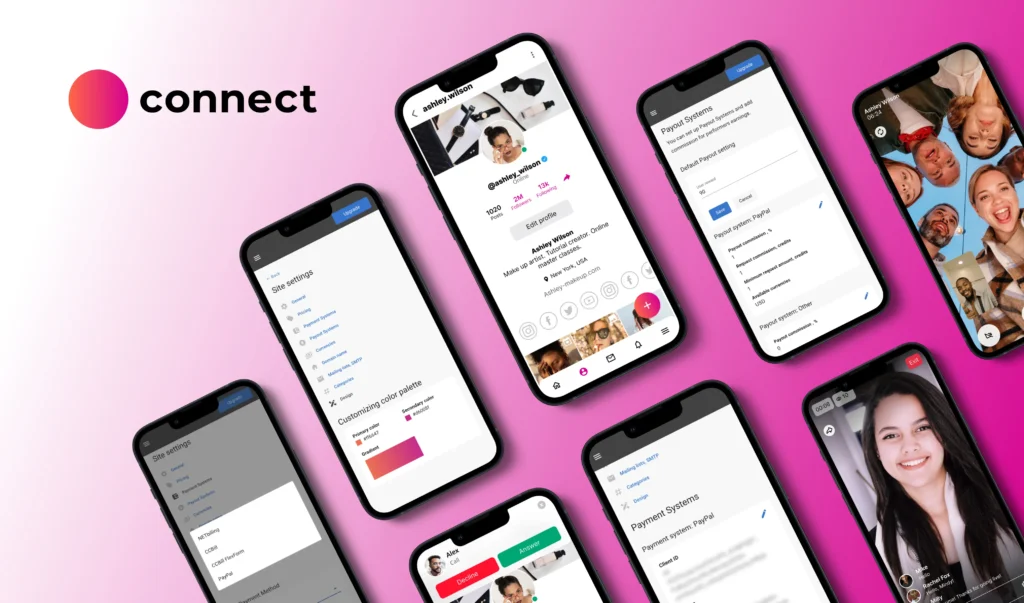
Scrile Connect is intended for creator monetization, subscription, fan, community, and paid content businesses.
It supports creator pages, white-label branding, subscriptions, tips, PPV, private video calls, livestreams, messaging, content bundles, payment integrations, and admin management.
It is most relevant for:
- fan subscription platforms;
- OnlyFans-style products;
- creator agency platforms;
- paid communities;
- membership sites;
- creator-owned websites.
An MVP does not have to enable every available tool. Scrile Connect can serve as the technical foundation while the founder launches with one primary revenue stream.
Scrile Stream
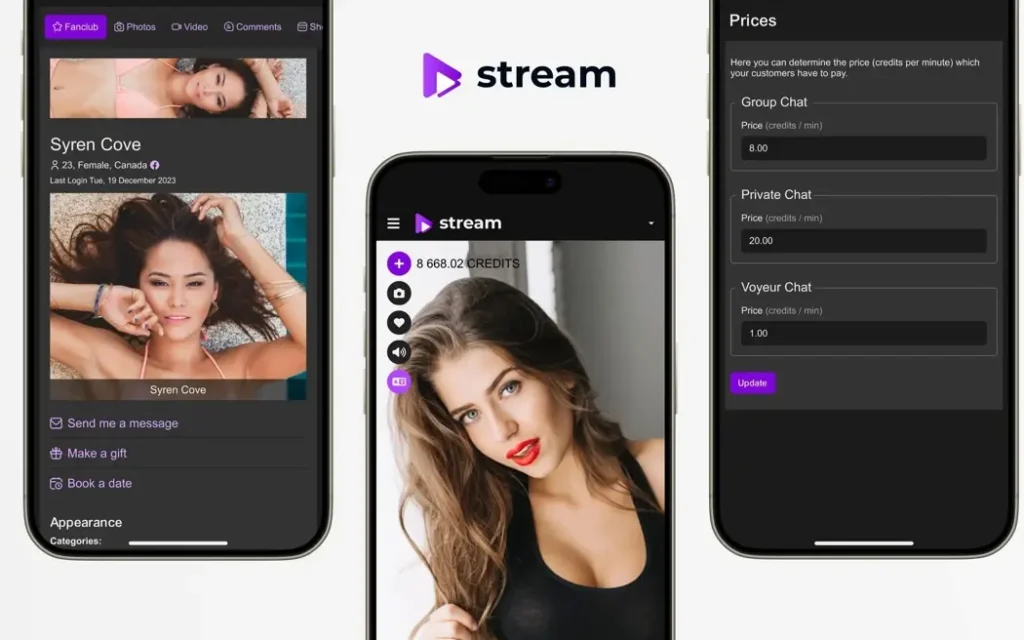
Scrile Stream is intended for businesses in which paid live video is the core product.
It supports branded video chat platforms with private and group formats, paid sessions, tips, payment integrations, premium content, hosting support, and administrative controls.
It is relevant for:
- webcam platforms;
- paid live entertainment;
- psychic and spiritual reading platforms;
- live coaching;
- group broadcasts;
- video interaction businesses.
Scrile AI
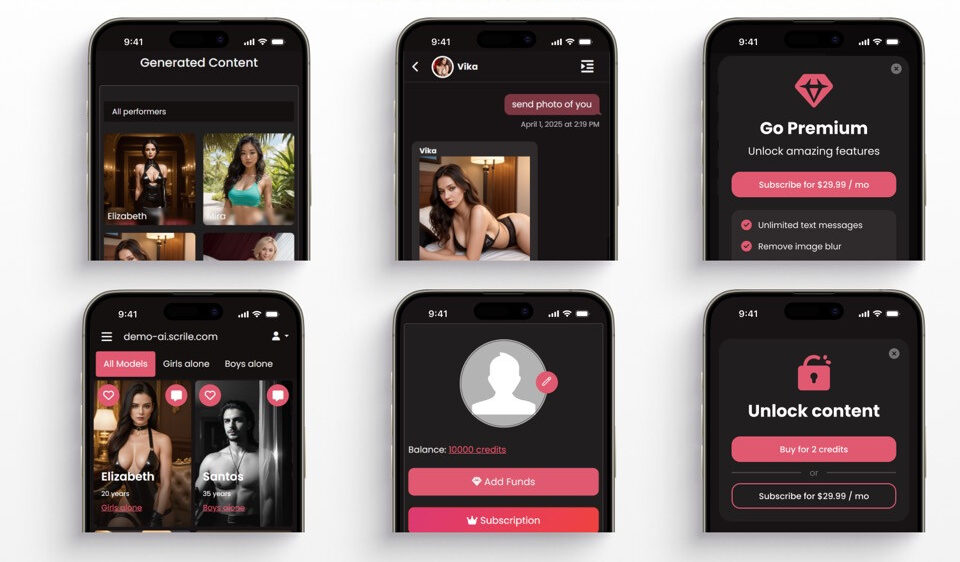
Scrile AI is intended for AI companion, character, and virtual interaction businesses.
Its foundation includes custom personas, memory, chat, images, voice, monetization, analytics, safety controls, and options for further development.
It is relevant for:
- AI companion products;
- AI character platforms;
- AI friend applications;
- virtual influencer businesses;
- roleplay and entertainment products;
- branded AI assistants.
Final takeaway
A creator platform MVP is not defined by how few screens it contains. It is defined by whether it can test the complete business transaction.
The first version should allow:
- A creator to publish a real paid offer.
- A relevant user to discover and understand it.
- The user to complete a payment.
- The platform to deliver the promised value.
- The platform to calculate its revenue.
- The creator to see earnings and receive a payout.
- An administrator to resolve predictable problems.
- The team to measure where the process works or fails.
Everything else should compete for a place in the roadmap.
Build advanced recommendations after users need better discovery. Add gamification after the basic experience creates retention. Create native applications after mobile behavior is proven. Expand monetization after the first revenue stream generates repeat transactions.
The goal of the MVP is not to show the final platform. It is to learn whether the business deserves to become one.
Ready to turn your idea into a working MVP?
Let’s discuss how to launch your platform MVP quickly and efficiently using a ready-made Scrile solution. We’ll help you choose the right product foundation, define the essential launch scope, and adapt the platform to your business model.
Frequently asked questions
What is a creator platform MVP?
A creator platform MVP is the smallest working version of a creator business that can complete and measure its primary transaction. It normally connects creator onboarding, an offer, user payment, access or interaction delivery, platform revenue, creator earnings, payouts, admin controls, and essential analytics.
What features should a creator platform MVP include?
The required creator platform features depend on the business model. Most MVPs need creator profiles, onboarding, one paid action, user accounts, checkout, delivery, earnings, payouts, basic admin controls, and transaction analytics. A subscription platform, live cam site, AI companion product, and expert marketplace require different core workflows.
What subscription platform features are necessary at launch?
A basic subscription platform normally needs creator profiles, paid plans, a content feed, gated access, recurring billing, account management, creator balances, payouts, moderation, and admin controls. Advanced messaging, stories, livestreaming, recommendations, and native apps can often wait.
Should an MVP include all OnlyFans clone features?
No. Mature OnlyFans-style platforms may include subscriptions, PPV, tips, paid messaging, live video, stories, lists, promotions, and referrals. An MVP should begin with the paid action that best represents the intended value proposition.
How long does it take to build a creator platform?
The timeline depends on the workflow, development approach, payment requirements, customization, and compliance needs. A standard SaaS or white-label solution can normally test a familiar workflow faster than a full custom build. A proprietary or experimental architecture usually requires more development and validation.
What is a white-label creator platform?
A white-label creator platform is an existing technical foundation that can be launched under another company’s brand, domain, positioning, and commercial model. It can reduce the amount of standard infrastructure that must be developed before testing the market.
What is the difference between SaaS and white-label software?
A SaaS product usually gives customers access to a standardized service operated under the provider’s product logic. White-label software is intended to become part of the customer’s own branded platform and may offer more control over design, payments, pricing, policies, and customization.
How do I choose between build vs buy for a creator platform?
Choose based on what needs to be validated. Standard SaaS works for simple demand tests. White-label software is useful for testing a familiar workflow under your own brand and commercial model. Custom development is appropriate when unique architecture, infrastructure, compliance, or product mechanics are central to the business.
When is white-label software not suitable?
White-label software may not be suitable when the business depends on experimental workflows, proprietary infrastructure, unusual financial logic, strict ownership requirements, or regulations that fundamentally shape the technical architecture.
What should a creator platform measure after launch?
The core metrics include creator activation, time to first offer, time to first creator earning, visitor-to-payment conversion, payment success, delivery completion, repeat purchases, renewals, refunds, chargebacks, support requests, and contribution margin per transaction.
What is the next step after defining the MVP?
After defining the launch scope, model how the platform will make money. Review its take rate, creator payouts, payment costs, revenue streams, and unit economics in the Scrile Academy guide to the creator platform business model.
